



Introduction: The Invisible Tax on Monetization
Every company migrating to a subscription or usage-based model focuses on implementing systems like SAP BRIM or a robust Quote-to-Cash (Q2C) platform. Yet, the single greatest failure point often occurs before the first invoice is even generated: Incomplete Data Convergence.
Data Convergence is the invisible glue that takes usage records, product information, customer profiles, and pricing rules and integrates them into a single, reliable source for billing. When this process is messy, it acts as an “Invisible Tax” on your monetization efforts, directly resulting in millions of dollars lost annually.
1. The Three Drainpipes of Revenue Leakage
Incomplete Data Convergence causes revenue leakage across three critical areas of the Q2C process:
A. Error-Riddled Quotes (The Initial Drain)
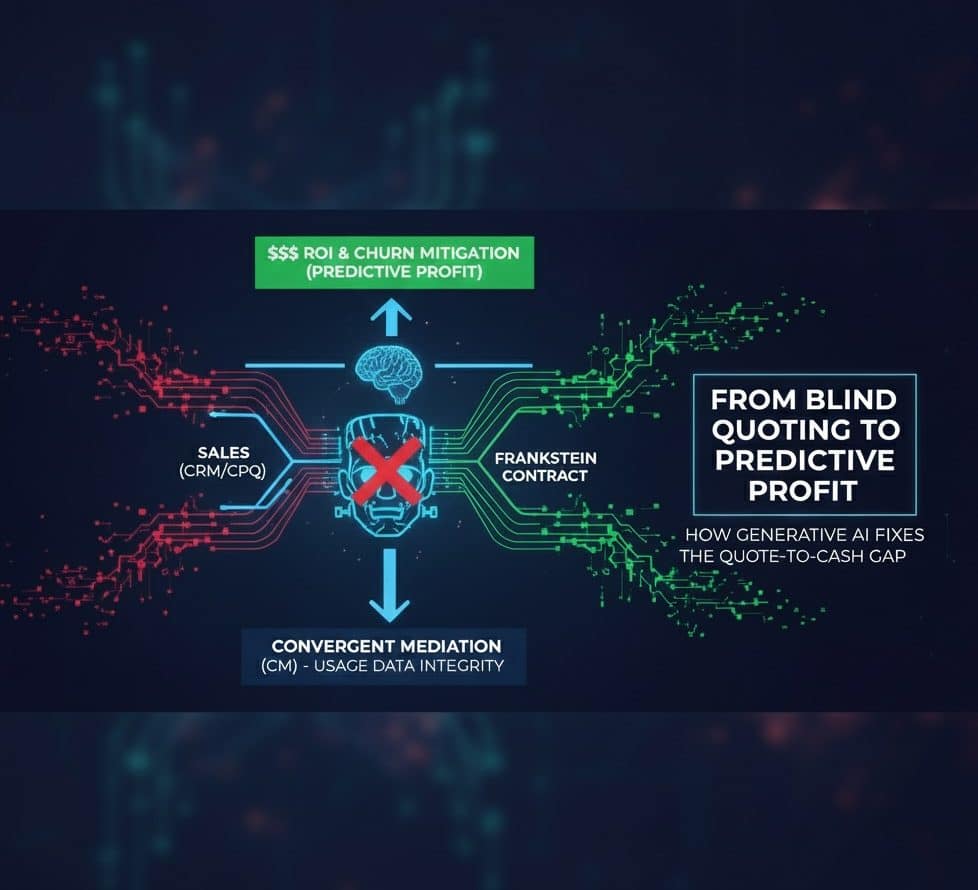
- The Problem: Sales teams cannot access unified data on customer usage history or contractual complexity in real-time. This leads to manual quote creation, non-compliant pricing, and incorrect bundling.
- The Cost: This friction extends the sales cycle (higher operational costs) and introduces errors that lead to “invoicing shock” for the customer, resulting in higher churn and disputes.
B. Billing System Blind Spots (The Middle Drain)
- The Problem: Without a robust Convergent Mediation (CM) layer, raw usage data from multiple sources (IoT devices, telecommunications systems, SaaS logs) reaches the billing engine (like SAP Convergent Invoicing) fragmented, delayed, or duplicated.
- The Cost: This forces finance teams to perform heavy reconciliations outside the system, delaying month-end closure by days, increasing labor costs, and often resulting in partial invoices being issued.
C. Regulatory Non-Compliance (The Legal Drain)
- The Problem: Convergent Mediation must apply real-time tax rules, data privacy rules (GDPR, CCPA), and regional compliance checks to every usage event before it becomes a billable item. Failure to do so exposes the company to massive fines.
- The Cost: The cost of fines and legal remediation for improper data handling far outweighs the investment in a proper CM architecture.
2. The Architect’s Solution: Convergent Mediation as the Single Source of Truth
A truly integrated Revenue Architecture requires treating Data Convergence not as an afterthought, but as the central nervous system.
The Convergent Mediation (CM) platform must be positioned as the authoritative hub that performs three crucial functions:
- Normalization: Takes data from any source (no matter the format or volume) and standardizes it into a consistent record.
- Enrichment: Adds necessary contextual data—who the user is, which pricing package they are on, and where they are located—making the raw data billable.
- Filtering & Aggregation: Ensures only valid, unique records are passed to SAP BRIM’s billing engine, eliminating the data “garbage” that slows down the entire system.
Conclusion
The choice is stark: continue paying the Invisible Tax of Chaos through manual reconciliation, delayed invoices, and customer churn, or invest in a Convergent Architecture that turns your data flow into a predictable, automated, and accurate revenue stream.
The future of monetization isn’t just about what you sell, but how perfectly you can account for it. Are you ready to stop paying for disorder and start building a frictionless Q2C future?